DLP
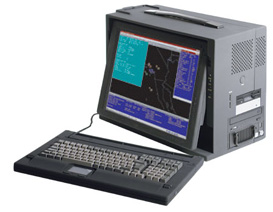
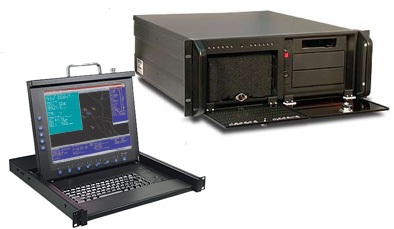
RSI's Data Link Processor (DLP) is an off-the-shelf PC based front end tactical data link communications processor. DLP allows one or more host systems to simultaneously participate on (or monitor) multiple external data links through a common message based interface. The common interface is implemented using RSI's Normalized Message Set (NMS) and is routed over an Ethernet link.
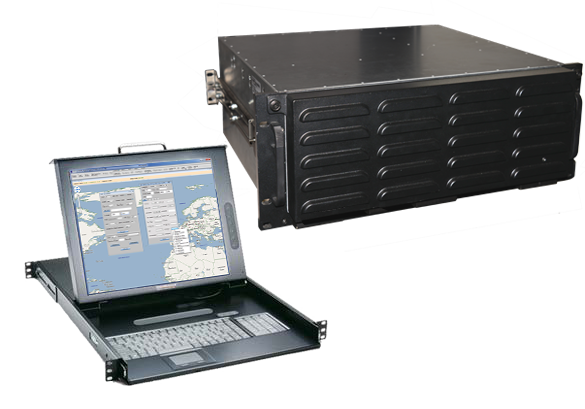
NMS allows the DLP to be installed in a separate, ruggedized commercial MIL-Spec hardware chassis, providing redundant power supplies, removable hard disk data storage, and space for up to 9 external interface cards (selection of chassis is configurable based on customer requirements). One slot may be used for a GPS card as required. Host systems may implement the message based interface either directly in their native software, or as an option, may utilize the available API library package that will effectively hide the message aspect of the NMS interface from the host system. An optional CORBA (Common Object Request Broker Architecture) interface is also available for use with NMS and can be configured to support a publish/subscribe methodology. As an option, if only Ethernet based external communications protocols are required, DLP software can be configured to execute in the host systems native processing environment using an available Ethernet port (assuming processing and memory availability are sufficient to support DLP processing in addition to native host processing).
Link 16
(MIL-STD-6016, STANG 5516)
Interfaces:
- LVT Platforms J/A/D
- Satellite J
- Class 2h (1553B)
- Class 2M (ADDSI)
- JREAP B/C
Link 11, Link 11B
(MIL-STD-6011, STANG 5511)
Interfaces:
- NTDS (Parallel)
- ATDS (Serial)
Normalized Message Set Functions
For C² Units
- Platform Situational Awareness
- Air Surveillance
- Surface Surveillance
- Subsurface Surveillance
- Land Surveillance
- Space Surveillance
- Ballistic Missile Defense Operations
- Electronic Warfare
- Weapons Unit
- Air Controlling Unit
- Command
- SAM Controlling Unit
Documentation
📄 Download DLP DatasheetMulti-Link Data Sharing
In diverse multi-link environments, the DLP can rapidly share data between participants on different links. DLP links may be independently configured to act as both data sources and data destinations with messages received on a source link translated to one or more destination links. Users may pre-define a translation matrix identifying those configured source data links which are to be translated to destination data links.
Intelligent Track Management
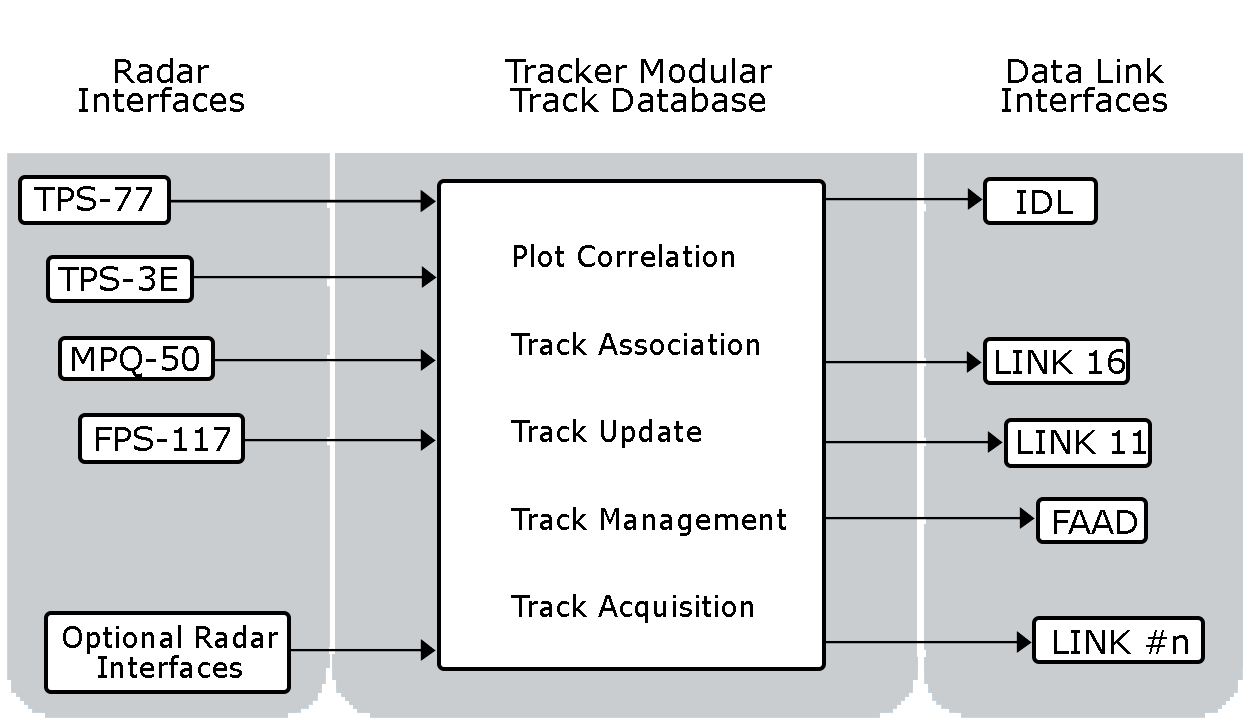
DLP creates tracks in its track database from received track messages. External interfaces configured into the DLP independently scan the Track Database both on a periodic on-demand basis to generate the appropriate messages for each object. Message generation and processing is based on the requirements of the associated specification for each configured external interface (e.g. MIL-STD-6016E). Translation between configured links is governed by applicable translation specifications.
Scalable Architecture
DLP is normally configured as a single workstation supporting multiple data link interfaces. The number of external interfaces supported by a single workstation is virtually unlimited. When more external interfaces are required, the DLP can be configured as a distributed network supporting multiple integrated workstations and processing nodes. Additional processing nodes can easily be added when elements of the system are physically separated. One or more DLPs can be combined with RSI's ComLINK network providing forwarding and concurrent interface unit capabilities.